.svg)

Choosing the right CRO tool depends on what you are trying to optimise, who is running the programme, and how sophisticated your experimentation infrastructure needs to be. Some tools are built for marketers running no-code tests on landing pages. Others are built for product and engineering teams running data-driven optimisation programmes across the full customer journey. This guide compares the best CRO tools in 2026 across both categories, so you can pick the right one without wasting months on the wrong platform.
Conversion rate optimisation is one of the highest-ROI activities a growth or marketing team can invest in.
A 1% improvement in conversion rate on a high-traffic funnel compounds significantly over time. A structured CRO programme, one that generates good hypotheses, runs clean experiments, and learns from every result and can deliver more revenue impact than most paid acquisition spend.
But the tool you use matters. And the CRO tool market in 2026 is more fragmented than ever, with tools that overlap in positioning but differ significantly in capability, price, and the type of team they are built for.
Here is a clear-eyed comparison of the best options.
What to Look for in a CRO Tool
Before comparing tools, the right choice depends on five things.
What you are optimising. Marketing site tests (headlines, CTAs, layouts) need different tools than product-level optimisation (onboarding flows, checkout, feature design). Most CRO tools specialise in one or the other.
Who runs the programme. If marketing needs to launch tests without engineering, a no-code visual editor is essential. If product and engineering are running the tests, a more technical tool with SDK-based implementation is more appropriate.
What data you need. Some CRO tools include heatmaps, session replays, and surveys alongside testing. Others are pure experimentation platforms. The right choice depends on whether you need the full behavioural analytics layer or just the testing capability.
Your statistical requirements. Sequential testing, CUPED variance reduction, guardrail metrics, and holdout groups are not standard across all tools. If you need reliable results at scale these features matter significantly.
Your existing stack. Some tools integrate natively with Amplitude, Mixpanel, or Snowflake. The tighter the integration, the less manual work required to connect CRO results to broader product data.
The Best CRO Tools in 2026
VWO (Visual Website Optimizer)
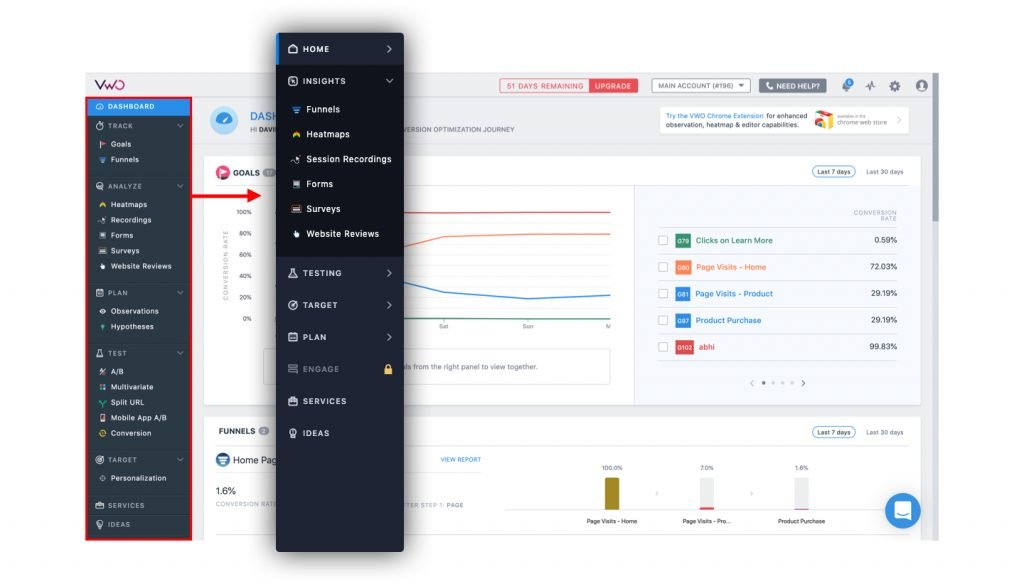
VWO is one of the most complete all-in-one CRO platforms available. It combines A/B testing, multivariate testing, heatmaps, session recordings, surveys, and funnel analysis in a single tool, making it particularly strong for marketing and CRO teams that want behavioural analytics and experimentation without managing multiple separate tools.
The visual editor is accessible to non-technical users and allows marketers to launch tests without engineering involvement. The combination of qualitative data (heatmaps, session replay) and quantitative testing in one platform is genuinely useful for teams that want to use behavioural signals to generate hypotheses and then test them in the same environment.
Best for: marketing and CRO teams running website optimisation programmes who want heatmaps, session replay, and A/B testing in a single platform without engineering dependency.
Limitations: not built for product-level or server-side experimentation. Statistical depth is more limited than dedicated experimentation platforms. Less suitable for engineering-led programmes at scale.
Pricing: tiered plans based on monthly tested users. Free trial available.
Hotjar
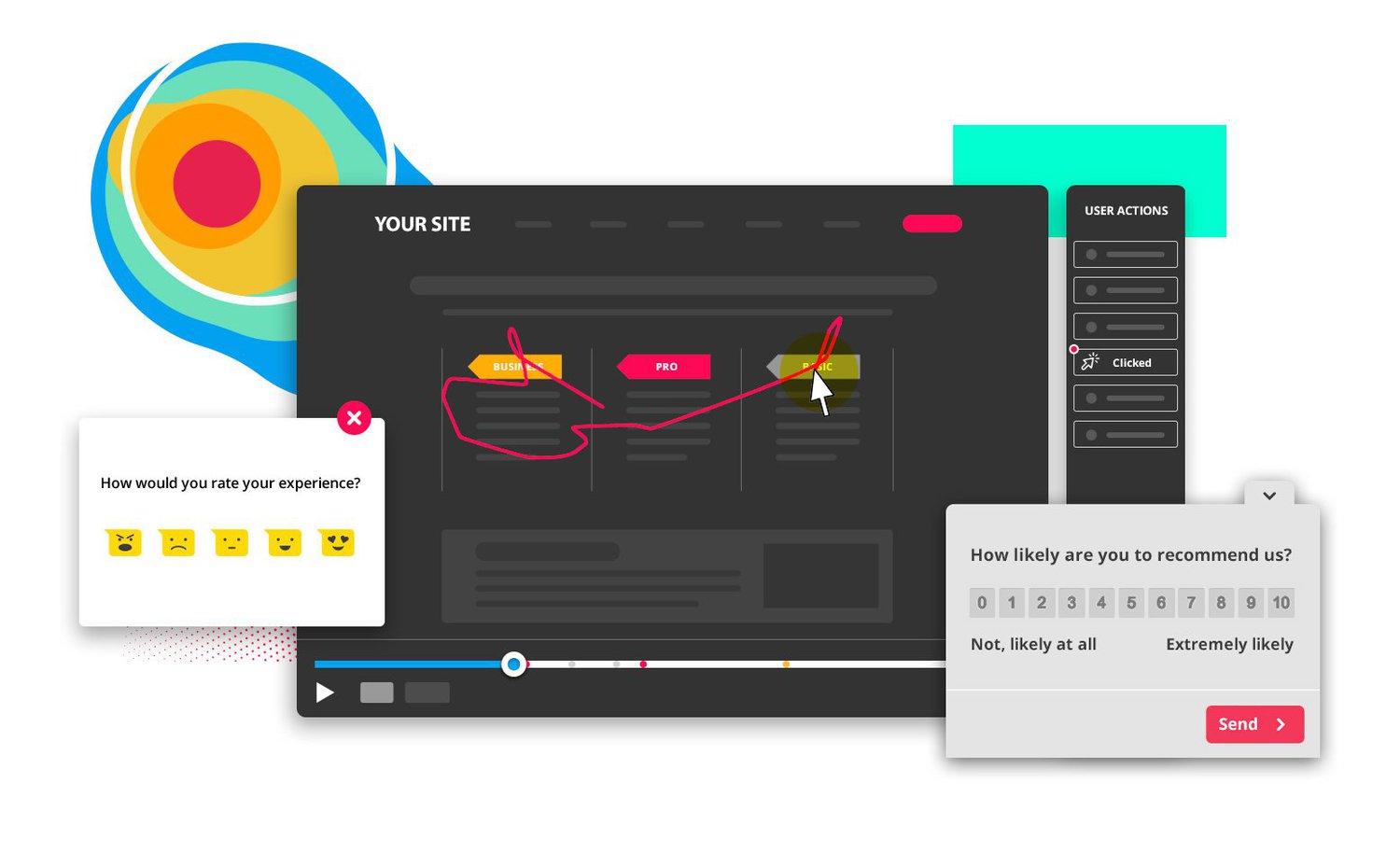
Hotjar is the most widely used behavioural analytics tool for CRO teams. It focuses on the diagnostic layer, heatmaps, session recordings, and surveys rather than A/B testing directly. Most teams use Hotjar alongside a separate testing tool, using Hotjar to identify where and why users are dropping off, then testing fixes in their experimentation platform.
The surveys and feedback tools are particularly strong: exit-intent surveys, post-interaction surveys, and NPS tools that give you direct user input on what is causing friction. Combined with session replay, Hotjar gives you both the visual and the verbal picture of user frustration.
If you are already using Amplitude, the combination of Amplitude Session Replay for in-product behaviour and Hotjar for marketing site diagnostics covers the full journey without significant overlap.
Best for: marketing and growth teams that need behavioural diagnostics like heatmaps, session replay, and surveys, to generate CRO hypotheses. Used alongside a separate testing tool rather than as a standalone CRO solution.
Limitations: no native A/B testing capability. Requires a separate experimentation tool for running tests. Less suitable for product-level behavioural analysis compared to dedicated product analytics platforms.
Pricing: free plan available. Paid plans start from around $32 per month.
Optimizely
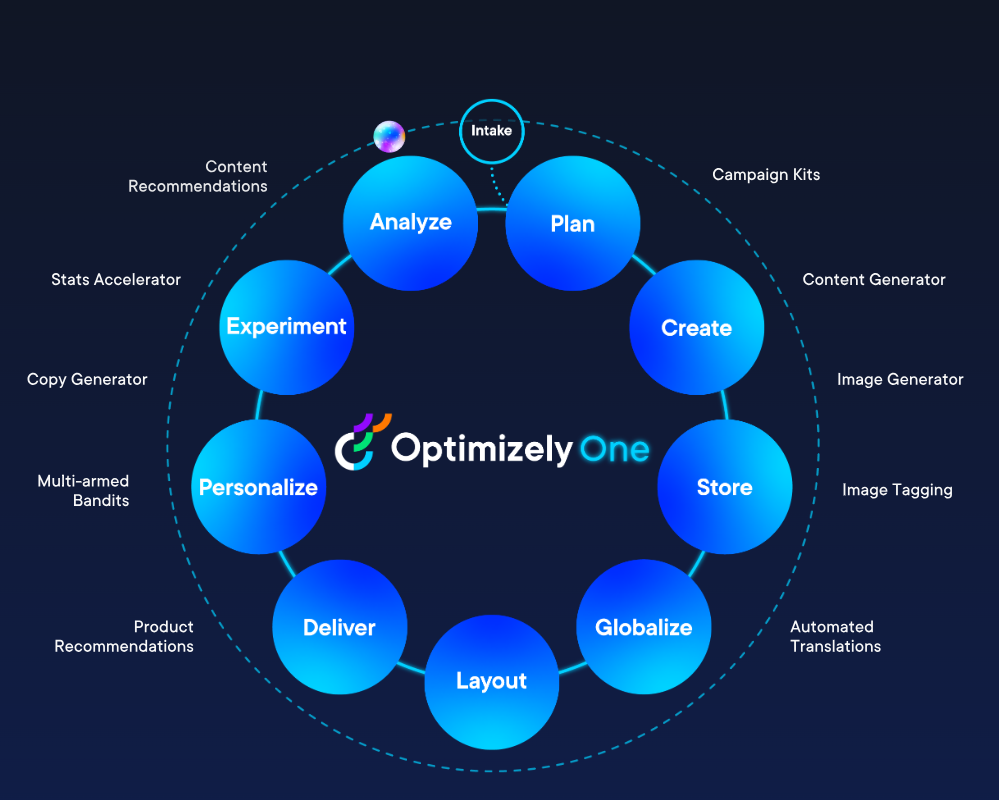
Optimizely is the most established enterprise CRO platform and one of the original leaders in A/B testing. It offers a mature no-code visual editor for web experiments, a full feature flagging and server-side experimentation platform, and a content management layer for larger organisations.
For enterprise marketing teams running high-volume conversion optimisation programmes on web properties, Optimizely's visual editor and workflow management features are among the most polished available. Its statistical engine is solid and the platform's governance and approval workflows make it well suited to larger teams with multiple stakeholders involved in the testing process.
Best for: enterprise teams running large-scale conversion optimisation programmes on web properties, or organisations that need mature workflow, governance, and approval features alongside experimentation.
Limitations: expensive, aspricing is enterprise-oriented and not accessible to most growth-stage teams. Can be complex to implement and maintain. The breadth of the platform can create overhead for smaller teams that only need the testing layer.
Pricing: enterprise pricing available on request.
ContentSquare
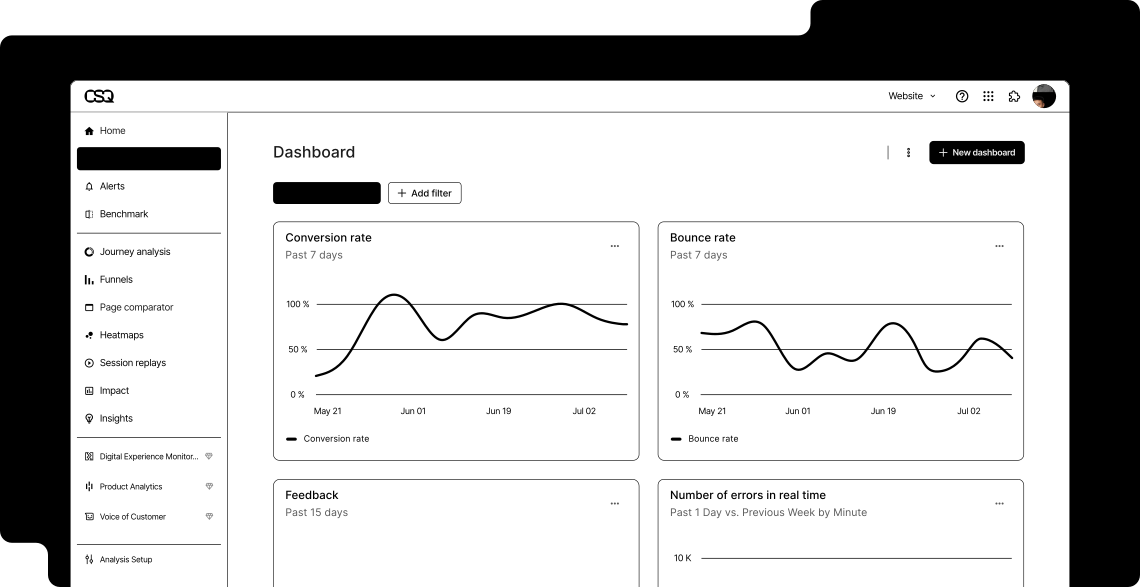
ContentSquare is a digital experience analytics platform that sits in a different category from pure A/B testing tools. Rather than running experiments directly, it gives you the deepest possible understanding of how users interact with your website withzone-based heatmaps, frustration scoring, rage click detection, journey analysis, and AI-powered experience recommendations.
For CRO teams, ContentSquare is most valuable as the hypothesis generation layer. It surfaces exactly where users are frustrated, which page zones are driving or killing conversions, and which journeys are leading to drop-off, giving you the evidence base to design experiments that are far more likely to produce meaningful lift.
Used alongside an experimentation platform, ContentSquare is one of the most powerful tools available for teams running serious conversion optimisation programmes at scale.
Best for: e-commerce, retail, and enterprise SaaS teams running high-traffic conversion optimisation programmes who need the deepest possible behavioural data layer to generate and validate hypotheses.
Limitations: enterprise pricing makes it inaccessible for most early-stage teams. Not a standalone experimentation tool, requires a separate platform for running A/B tests. Overkill for teams not running experiments at significant scale.
Pricing: enterprise pricing available on request.
Statsig
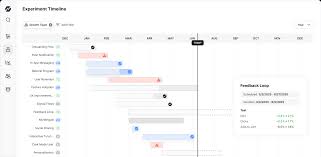
Statsig is a feature flagging and experimentation platform built by ex-Facebook engineers. While it is primarily positioned as a product experimentation tool rather than a pure CRO platform, it is one of the strongest options for growth teams running conversion optimisation programmes that extend beyond the marketing site into the product itself -- onboarding flows, checkout experiences, pricing pages, and in-product feature tests.
Its statistical depth is best in class: sequential testing, CUPED variance reduction, holdout groups, and guardrail metrics are all available out of the box. For CRO teams that need statistical rigour alongside feature management capabilities, Statsig covers both.
Best for: product and growth teams running conversion optimisation programmes that extend into the product like onboarding, checkout, pricing, and feature design -- with engineering involvement.
Limitations: requires SDK implementation by engineering. Not suitable for no-code marketing site tests. Setup quality significantly affects data reliability: a structured Statsig audit is recommended before running experiments at scale.
Pricing: free tier available. Paid plans scale with usage.
GrowthBook
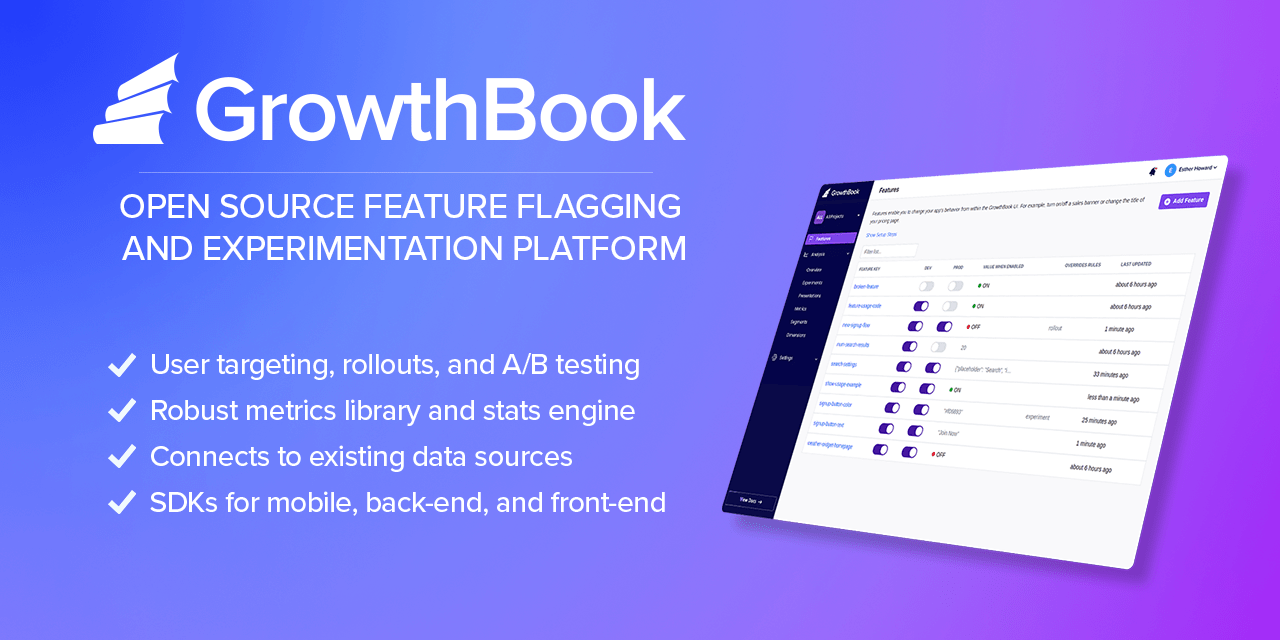
GrowthBook is an open-source experimentation platform with a warehouse-native architecture, it reads experiment results directly from your data warehouse (Snowflake, BigQuery, Redshift) rather than storing data itself. For CRO teams with a mature data stack, this gives full control over experiment data and removes the dependency on a separate data collection layer.
Its metric definition flexibility is particularly strong for CRO use cases, if your primary conversion metric requires complex SQL logic (revenue per visitor adjusted for returns, for example), GrowthBook handles it cleanly where other tools require workarounds.
Best for: data-mature CRO teams with an existing warehouse who want warehouse-native experiment analysis and full control over their data and metric definitions.
Limitations: requires a data warehouse connection to function. More complex initial setup than hosted alternatives. Visual editor requires a paid plan.
Pricing: open-source self-hosted version is free. Cloud-hosted version has a free tier and paid plans.
Amplitude Experiment
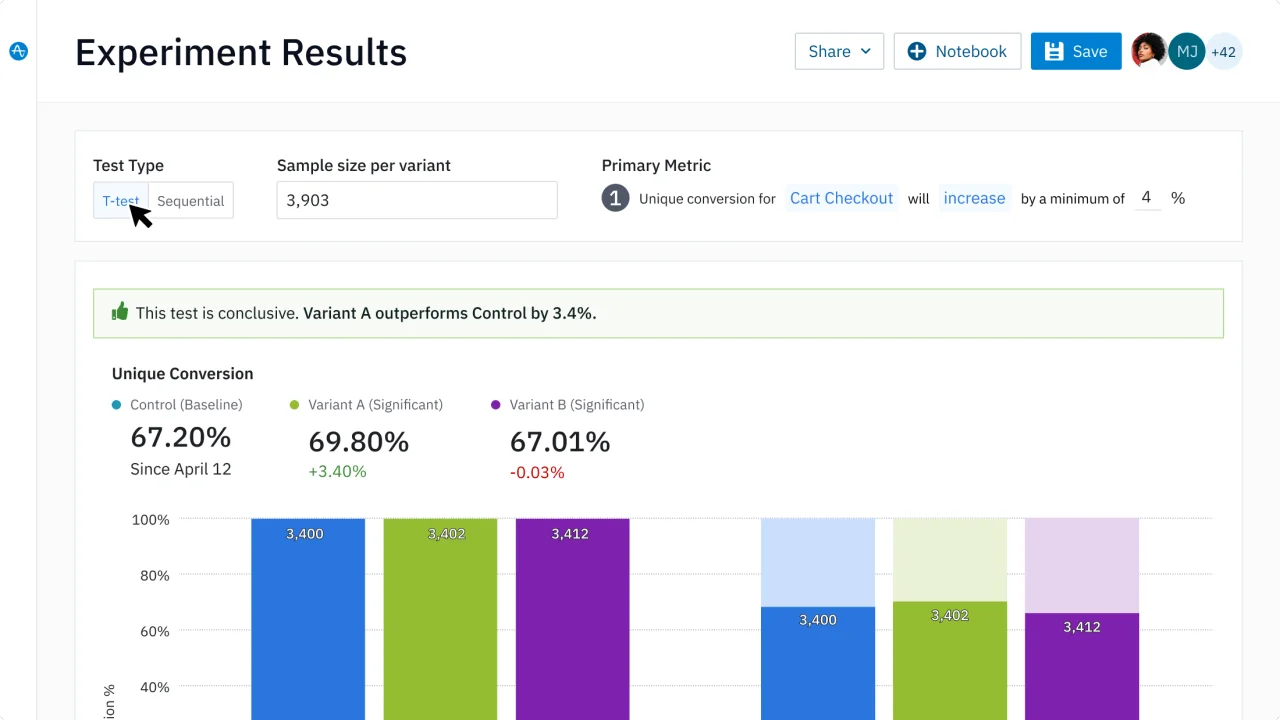
Amplitude Experiment is the experimentation layer built directly into Amplitude analytics. For teams already on Amplitude, it is the strongest option for connecting CRO experiment results to broader product metrics like funnel performance, retention, feature adoption, without any data export or manual connection.
It offers both Web Experiment (a no-code visual editor for marketing site tests) and Feature Experiment (a server-side SDK-based tool for product tests). The native integration means experiment results appear directly alongside your product data, removing the analytical friction of connecting a separate testing tool to your analytics platform.
Best for: teams already using Amplitude for product analytics who want CRO experimentation natively connected to their existing data.
Limitations: Feature Experiment requires engineering for SDK implementation. Advanced statistical features like CUPED are less mature than Statsig. Pricing increases significantly at scale.
Pricing: Web Experiment included in Starter plan with limits. Feature Experiment is a paid add-on on Growth and Enterprise plans.
How to Choose the Right CRO Tool
The right tool depends entirely on your specific situation. Here is a simple decision framework.
If you are a marketing team running no-code website tests and want heatmaps, session replay, and A/B testing in one platform: VWO.
If you need the best behavioural diagnostics layer to generate hypotheses before testing: Hotjar alongside a separate testing tool.
If you are an enterprise team running large-scale web optimisation with governance requirements: Optimizely.
If you are running high-traffic e-commerce optimisation and need the deepest possible experience analytics: ContentSquare.
If you are a product or growth team running server-side experiments across the full customer journey with statistical rigour: Statsig.
If you have a mature data warehouse and want full control over your experiment data and metrics: GrowthBook.
If you are already on Amplitude and want CRO experimentation natively connected to your product analytics: Amplitude Experiment.
The tool is one part of the equation. The other part is the process is how you generate hypotheses, prioritise tests, evaluate results, and make learnings compound over time. The 8-step A/B testing framework applies regardless of which tool you use. And avoiding false winners requires a structured evaluation process that no tool enforces automatically.
The Hidden Cost of Manual CRO
Most CRO programmes underperform not because they chose the wrong tool but because the process around the tool is too manual to sustain. Hypothesis generation takes weeks. Prioritisation is based on opinion. Results get documented but never automatically inform the next round of tests.
The teams running the most effective CRO programmes in 2026 are the ones combining the right tool with an AI-powered workflow that removes the manual bottlenecks, so they can run more experiments, with more rigour, without adding headcount.
Want to make your CRO programme compound?
If you are running experiments but the programme feels slow, manual, or like it is not building on itself: the Experimentation Growth Engine is built exactly for this. AI-powered hypothesis generation, prioritisation, and result evaluation connected to your existing stack.
👉See the Experimentation Growth Engine
Want to talk through your CRO setup?
FAQ
What is the best CRO tool in 2026?
The best CRO tool depends on your use case. VWO is the strongest all-in-one option for marketing teams wanting heatmaps and testing combined. Hotjar is best for behavioural diagnostics. Optimizely leads for enterprise web optimisation. ContentSquare is best for deep experience analytics. Statsig is strongest for product-level server-side experimentation. GrowthBook is best for warehouse-native analysis. Amplitude Experiment is best for teams already on Amplitude.
What is the difference between CRO tools and A/B testing tools?
CRO tools typically include a broader set of capabilities beyond A/B testing -- heatmaps, session replays, surveys, funnel analysis, and personalisation. A/B testing tools focus specifically on running controlled experiments. Many CRO platforms include A/B testing as one component alongside the broader diagnostic and optimisation toolkit.
Do I need engineering to use a CRO tool?
It depends on the tool. No-code tools like VWO and Optimizely Web allow marketers to run website tests without engineering. Server-side tools like Statsig, GrowthBook, and Amplitude Feature Experiment require SDK implementation by engineering. For product-level optimisation, engineering involvement is almost always required.
What is the difference between heatmaps and A/B testing in CRO?
Heatmaps show you where users click, scroll, and focus on a page -- they are diagnostic tools that help you understand current user behaviour and generate hypotheses. A/B testing lets you run controlled experiments to measure the impact of a specific change. CRO programmes use both: heatmaps to find the problem, A/B tests to validate the fix.
How much do CRO tools cost?
Costs vary significantly. Hotjar has a free plan with paid plans from around $32 per month. VWO pricing is based on monthly tested users. GrowthBook has a free open-source version. Statsig has a free tier. Optimizely and ContentSquare are enterprise-priced and typically cost thousands per month. Amplitude Experiment pricing depends on your existing Amplitude contract.
What is sequential testing and which CRO tools support it?
Sequential testing is a statistical method that allows you to monitor experiment results at any point without inflating your false positive rate. It adjusts the significance threshold dynamically as data accumulates. Statsig and GrowthBook support it natively. Optimizely supports it on enterprise plans. Most no-code marketing testing tools do not support it.