.svg)

Choosing the right product analytics tool in 2026 means navigating a market that has changed significantly in the last two years, with AI features are now standard, pricing models have shifted, and the gap between enterprise and startup-friendly tools has narrowed. This guide compares the best product analytics tools available today across the dimensions that actually matter: event tracking, funnel and retention analysis, experimentation, AI capabilities, integrations, and price. The goal is to help you pick the right tool for your stage, stack, and team -- not just the most well-known one.
Product analytics is not a nice-to-have anymore.
Teams that cannot answer basic questions: where are users dropping off, which features drive retention, what happened to conversion after the last release, are flying blind on decisions that compound over time. The right product analytics tool makes those questions answerable in minutes. The wrong one creates more questions than it answers.
The market in 2026 looks different from two years ago. Every major tool has added AI features. Several have changed their pricing significantly. And a new generation of open-source and warehouse-native tools has given teams more options at lower price points than ever before.
Here is where each tool stands.
What to Look for in a Product Analytics Tool
Before comparing tools, five dimensions determine fit more than any feature list.
Event tracking model. Most product analytics tools use an event-based model whereyou define events, instrument them in your product, and the tool analyses the resulting data. The quality of your tracking plan determines the quality of your analytics. Tools that make it easier to define, govern, and maintain a clean event taxonomy are worth the premium for teams at scale.
Core analysis capabilities. Funnel analysis, retention analysis, cohort analysis, and user journey mapping are the core analytical methods that drive product decisions. Every tool on this list supports them, but the differences are in depth, flexibility, and how easy they are for non-technical users to build.
Experimentation. Does the tool include native A/B testing and feature flagging, or do you need a separate tool? Native integration between analytics and experimentation removes significant analytical friction, and experiment results appear directly in your product metrics context without data export.
AI features. In 2026, AI-powered analysis is a meaningful differentiator. The ability to ask questions in natural language, get automated anomaly detection, and generate chart summaries automatically has moved from novelty to genuine productivity lever for teams that have their data set up correctly.
Pricing model. Most tools price on Monthly Tracked Users (MTUs) or events volume. Understanding how your usage maps to the pricing model before signing a contract prevents significant surprises at renewal.
The Best Product Analytics Tools in 2026
Amplitude
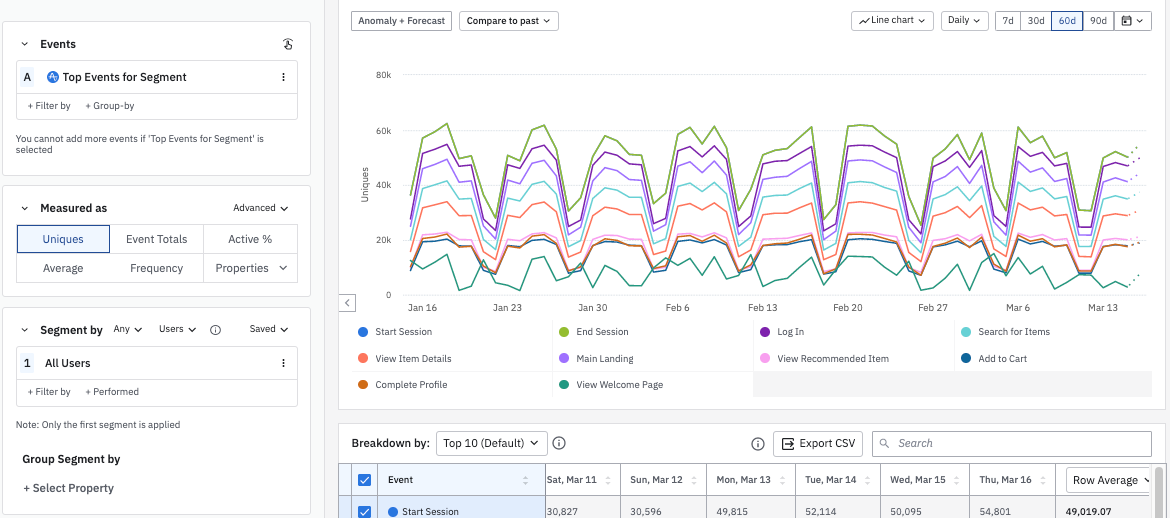
Amplitude is the market leader in product analytics for growth-stage and enterprise SaaS. It offers the deepest set of analytical capabilities available like funnels, retention, cohorts, user journeys, pathfinder analysis, and revenue analytics, alongside native experimentation (Web Experiment and Feature Experiment), AI-powered analysis through its Dashboard Agent and Chat features, and one of the strongest ecosystems of integrations in the market.
The AI layer is genuinely useful when set up correctly. The Dashboard Agent generates written summaries of dashboard performance automatically. The Chat feature lets users ask questions in natural language and get charts and analyses in response. The quality of output depends heavily on how well the underlying tracking and AI context are configured, but for teams that invest in the setup, it is a meaningful productivity multiplier.
Amplitude's depth is also its complexity. Non-technical users face a steeper learning curve than with simpler tools, and implementation quality significantly affects the value teams get from the platform. Teams that implement Amplitude without a structured tracking plan and clean event taxonomy often find themselves with data they cannot trust.
Best for: growth-stage and enterprise SaaS teams that need deep product analytics, native experimentation, and AI-powered analysis, and are willing to invest in correct implementation.
Limitations: pricing increases significantly at scale. Complexity requires investment in implementation and ongoing governance. AI features require clean data and proper context configuration to produce reliable output.
Pricing: free Starter plan available. Growth and Enterprise plans priced on MTUs, available on request.
Mixpanel
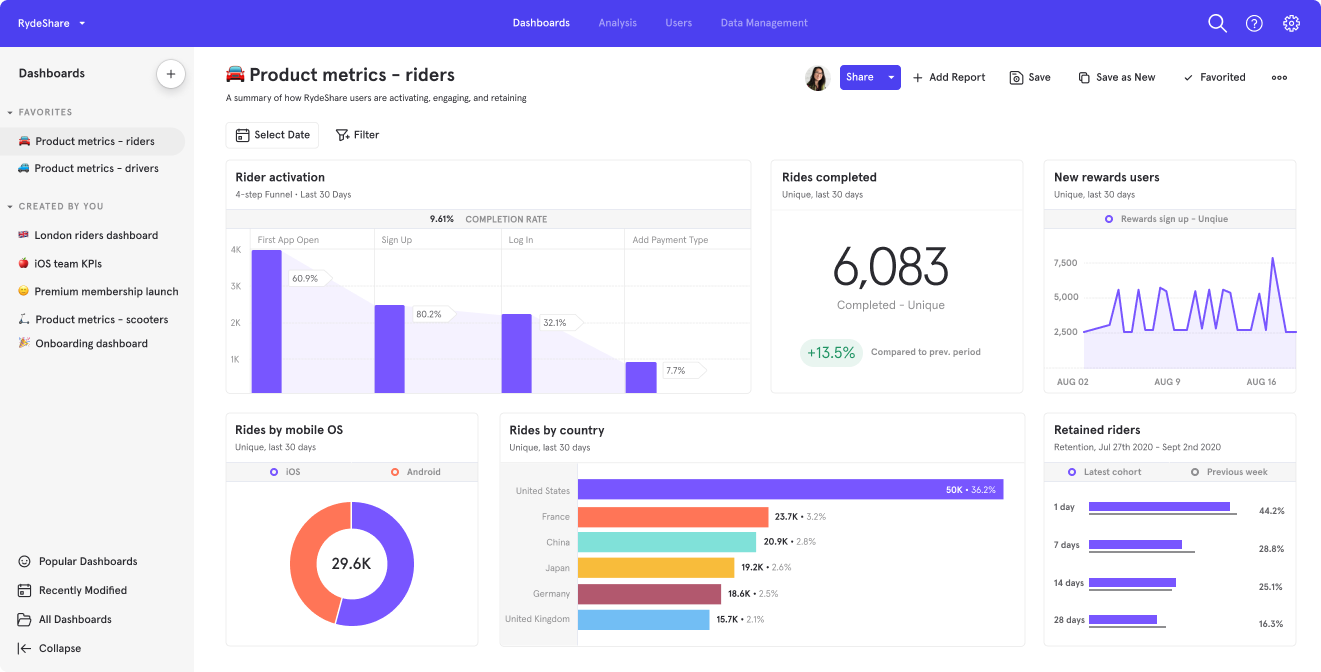
Mixpanel is Amplitude's closest competitor and the tool most often evaluated alongside it. It offers strong funnel, retention, and flow analysis with a user interface that many teams find more accessible than Amplitude's, particularly for less technical product managers and marketers who need to build analyses without data team support.
Mixpanel's strength is its simplicity and speed to insight. Building a funnel or cohort in Mixpanel is faster for most users than in Amplitude. Its flow analysis (Flows) is particularly strong for understanding the paths users take through a product. Pricing has become more competitive in recent years and it is often the better value choice for teams that do not need Amplitude's full depth.
The tradeoff is analytical depth. Amplitude's retention analysis, pathfinder charts, and experimentation capabilities are more mature. Teams running sophisticated experimentation programmes or needing granular retention analysis at scale typically find Amplitude more capable.
Best for: product and growth teams that need strong core analytics with a faster learning curve, or teams where non-technical users need to build analyses independently.
Limitations: less depth than Amplitude on retention analysis, experimentation, and AI features. Weaker data governance tooling for teams managing complex event taxonomies at scale.
Pricing: free plan available. Paid plans start from around $28 per month, scaling with MTUs.
PostHog
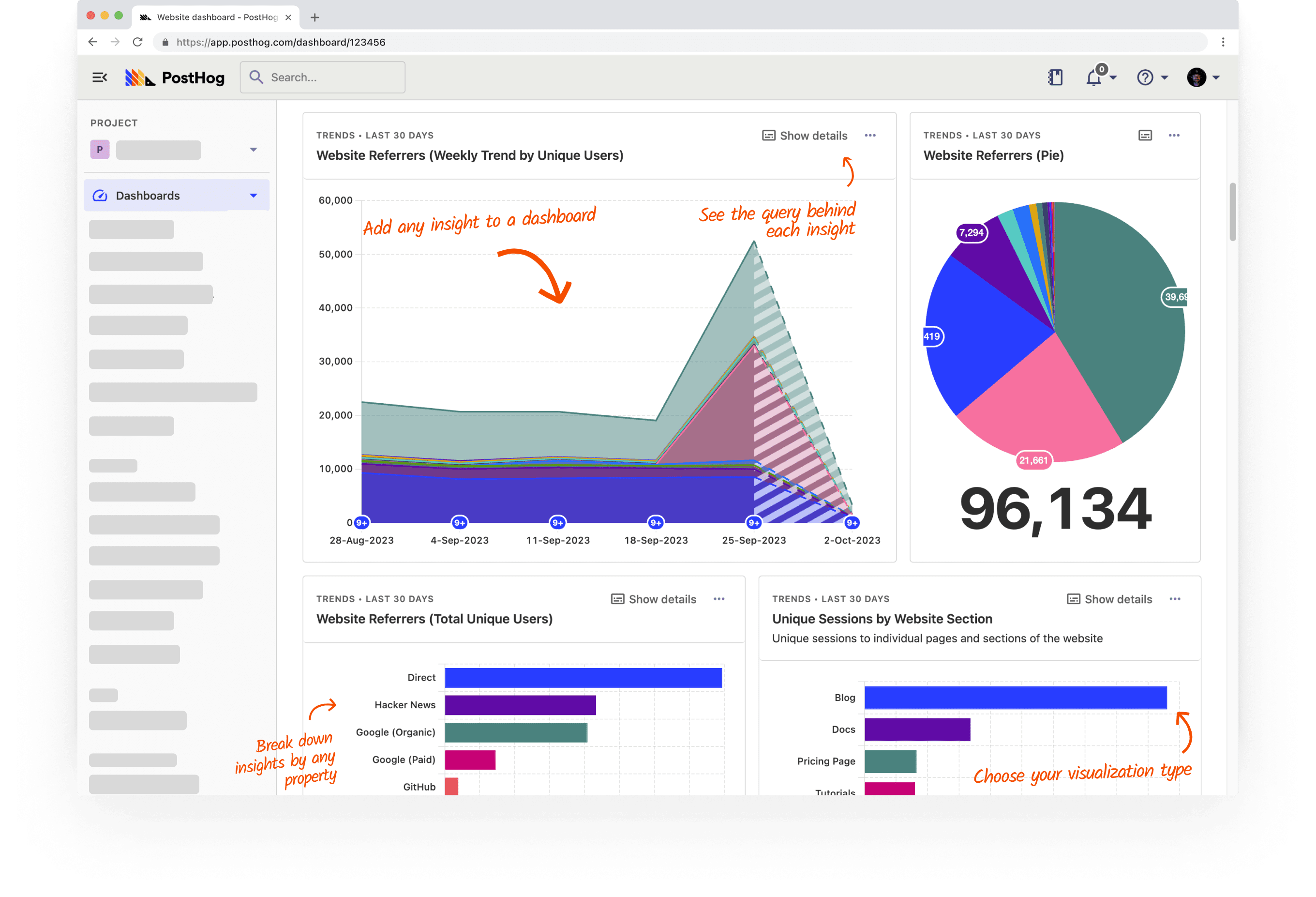
PostHog is an open-source product analytics platform that combines event analytics, session replay, feature flags, A/B testing, and surveys in a single tool. Its open-source architecture means you can self-host it on your own infrastructure, giving you full data ownership and no per-user pricing for the self-hosted version.
PostHog's breadth is its biggest differentiator. For teams that want product analytics, session replay, and experimentation without managing multiple tools and multiple vendor relationships, PostHog covers all three in one platform. The developer experience is strong, it is built by and for engineering-led teams and the documentation and SDK quality reflect that.
The limitations show at scale and for non-technical users. The analytics depth is less mature than Amplitude or Mixpanel for advanced use cases. The UI is more engineering-oriented and less accessible for product managers who want to build analyses without SQL. Teams moving from PostHog to Amplitude or Mixpanel typically do so when they outgrow PostHog's analytical depth or need more mature governance tooling.
Best for: engineering-led startups and scale-ups that want product analytics, session replay, and experimentation in a single open-source tool with full data ownership.
Limitations: less analytical depth than Amplitude or Mixpanel for advanced use cases. Less accessible for non-technical users. Self-hosted version requires infrastructure maintenance.
Pricing: generous free cloud tier. Paid plans scale with usage. Self-hosted version is free.
Heap

Heap's defining characteristic is autocapture, it automatically records every user interaction on your website or app without requiring manual event instrumentation. This means you can analyse user behaviour retroactively, going back to ask questions about events you never explicitly tracked.
For teams that have struggled with the instrumentation overhead of event-based tools, or that have repeatedly found themselves without data for an analysis they needed to run, Heap's autocapture approach removes a significant friction point. You ship faster because you are not blocked on tracking implementation for every new feature.
The tradeoff is data volume and governance. Autocapture generates enormous amounts of raw interaction data that needs to be cleaned, labelled, and organised into meaningful events. Teams that do not invest in this governance work end up with an overwhelming amount of data and no clear way to build reliable analyses from it.
Best for: teams that want retroactive analysis capabilities and are willing to invest in data governance to make autocaptured data useful.
Limitations: data governance overhead can be significant without a dedicated analytics function. Less suitable for teams that need a clean, curated event taxonomy as the foundation of their analytics.
Pricing: available on request.
FullStory
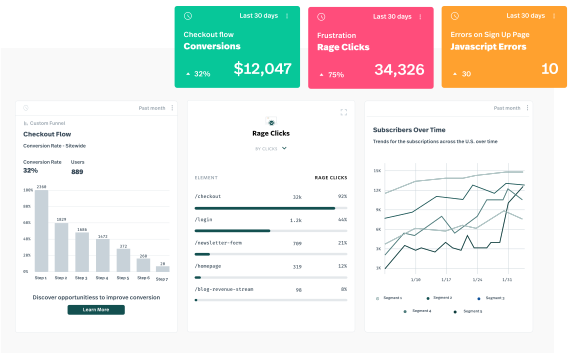
FullStory is a digital experience intelligence platform that combines product analytics with session replay, heatmaps, and frustration signals, giving product and growth teams both the quantitative picture (what users are doing) and the qualitative picture (how they are doing it) in a single tool.
Its defining feature is autocapture with retroactive analysis, like Heap, FullStory automatically records every user interaction without requiring manual event instrumentation upfront. This means you can go back and answer questions about behaviour that happened before you thought to track it. Combined with session replay tied directly to analytics data, FullStory makes it possible to jump from a funnel drop-off directly into the sessions of users who left at that step -- without switching tools.
FullStory's AI layer: called FullStory AI, automatically surfaces friction signals, anomalies, and behavioural patterns without manual analysis. For product teams that want AI-powered insights connected to real session data rather than just event aggregates, this is a genuinely differentiated capability.
Where FullStory is weaker is in the depth of its core product analytics like retention analysis, cohort analysis, and experimentation are less mature than Amplitude or Mixpanel. Teams that need sophisticated retention curves or native A/B testing built into their analytics platform will find FullStory limiting for those specific use cases.
Best for: product and UX teams that need behavioural analytics and session replay tightly connected in one platform, particularly for diagnosing friction and optimising user experience across web and mobile.
Limitations: core product analytics depth less mature than Amplitude or Mixpanel for retention and cohort analysis. No native experimentation layer. Pricing is enterprise-oriented and can be significant at scale.
Pricing: available on request. Enterprise-focused pricing.
GA4 (Google Analytics 4)
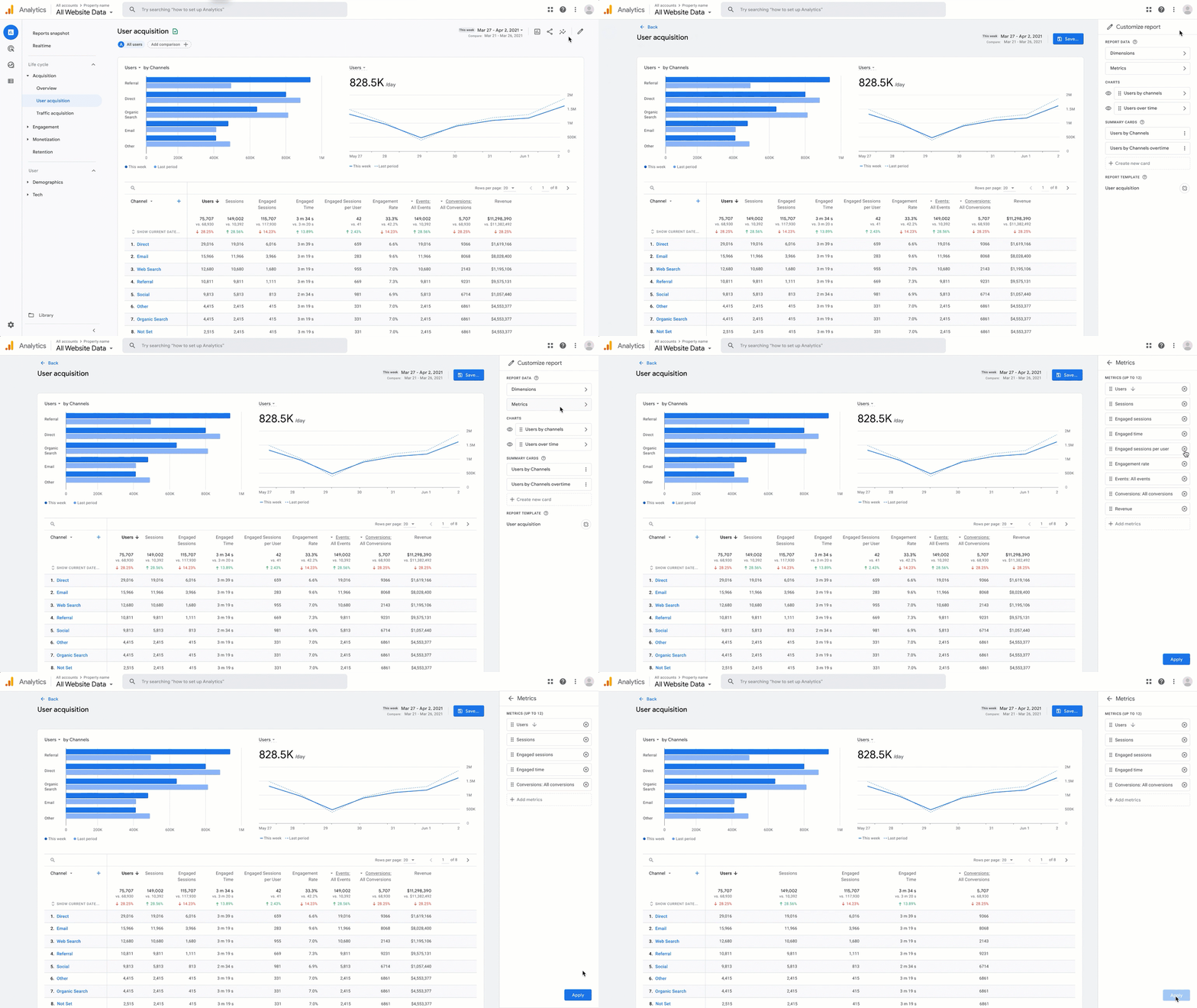
GA4 is the most widely used analytics platform in the world, and the most commonly misused one for product analytics specifically. It is a strong tool for marketing and acquisition analytics: understanding traffic sources, campaign performance, and top-level conversion funnels from marketing channels into your product.
For product analytics, understanding user behaviour inside your product, building retention curves, running cohort analysis, and connecting feature usage to business outcomes, GA4 has significant limitations. Its event model is less flexible than Amplitude or Mixpanel, its user-level analysis is constrained by privacy limitations, and its retention and cohort analysis capabilities are less mature than dedicated product analytics tools.
Most mature product teams use GA4 for marketing analytics and a dedicated product analytics tool for in-product behaviour. Using GA4 alone for product analytics is a common early-stage decision that creates significant analytical debt as teams scale.
Best for: marketing and acquisition analytics, traffic analysis, and campaign performance measurement. Not recommended as a standalone product analytics tool for teams beyond early stage.
Limitations: not designed for deep product analytics. User-level analysis constrained by privacy limitations. Retention and cohort analysis significantly less capable than dedicated product analytics tools.
Pricing: free. GA4 360 (enterprise) available on request.
How to Choose the Right Product Analytics Tool
Run through these five questions in order. The answers will narrow your options significantly.
What is your primary use case? If you need deep product analytics with AI capabilities and native experimentation: Amplitude. If you need strong core analytics with a faster learning curve: Mixpanel. If you need product analytics, session replay, and experimentation in one open-source tool: PostHog. If you need behavioural analytics and session replay tightly connected with AI-powered frustration signals: FullStory. If you need autocapture with retroactive analysis: Heap.
What is your team's technical level? PostHog is more engineering-oriented. Amplitude and Mixpanel are more accessible to non-technical product and marketing users. FullStory and Heap are more accessible for UX and product teams who want insight without instrumentation overhead.
What is your traffic volume and pricing sensitivity? PostHog's free tier is generous. Mixpanel is more price-competitive at scale than Amplitude. FullStory and Heap pricing can become significant at high volumes.
Do you need experimentation built in? Amplitude Experiment offers native experimentation. PostHog includes feature flags and A/B testing. Mixpanel, FullStory, and Heap require a separate experimentation tool.
What does your existing stack look like? GA4 for marketing analytics alongside Amplitude or Mixpanel for product analytics is the most common mature stack. Segment as a CDP feeding into your analytics tool of choice is the most common data infrastructure pattern. The funnel analysis and retention analysis you build on top of your chosen tool are only as reliable as the event tracking underneath them, invest in the foundation before optimising the tool choice.
Want help choosing and implementing the right product analytics tool?
Book a free call and we will tell you exactly which tool fits your stage, stack, and team, and what you need to have in place to get real value from it from day one.
FAQ
What is the best product analytics tool in 2026?
The best product analytics tool depends on your use case and stage. Amplitude leads for depth, AI capabilities, and native experimentation at growth-stage and enterprise SaaS. Mixpanel is the strongest alternative for teams that need good core analytics with a faster learning curve. PostHog is best for engineering-led teams wanting an open-source all-in-one solution. FullStory leads for teams that need behavioural analytics and session replay tightly connected. GA4 is best for marketing analytics but not recommended as a standalone product analytics tool.
What is the difference between product analytics and web analytics?
Web analytics (GA4, Adobe Analytics) focuses on traffic, sessions, and marketing channel performance -- understanding how users arrive at your site and top-level conversion funnels. Product analytics (Amplitude, Mixpanel, PostHog) focuses on user behaviour inside your product -- feature adoption, retention, user journeys, and the connection between product usage and business outcomes. Most mature teams use both.
Is Amplitude better than Mixpanel?
For teams that need deep product analytics, native experimentation, and AI-powered analysis -- Amplitude is the stronger choice. For teams that need good core analytics with a faster learning curve and more competitive pricing -- Mixpanel is often the better fit. The right choice depends on your analytical needs, team structure, and budget.
Is PostHog good for product analytics?
Yes -- PostHog is a strong choice for engineering-led teams that want product analytics, session replay, and experimentation in a single open-source platform. Its analytical depth is less mature than Amplitude or Mixpanel for advanced use cases, and the UI is more engineering-oriented. Teams that outgrow PostHog typically move to Amplitude or Mixpanel when they need more sophisticated retention analysis or data governance tooling.
What is the difference between Heap and FullStory?
Both use autocapture to automatically record user interactions without manual event instrumentation. FullStory focuses more on the digital experience layer -- session replay, frustration signals, and AI-powered behavioural insights -- and is stronger for UX and experience teams. Heap focuses more on product analytics and retroactive data analysis. Both require data governance investment to make autocaptured data useful for reliable analysis.
How much does product analytics software cost?
Costs vary significantly. PostHog has a generous free tier and open-source self-hosted option. Mixpanel starts from around $28 per month and scales with MTUs. Amplitude has a free Starter plan with Growth and Enterprise plans priced on MTUs and available on request. Heap and FullStory pricing is enterprise-focused and available on request. GA4 is free.