.svg)

Choosing the right A/B testing tool depends on your tech stack, traffic volume, team structure, and how sophisticated your experimentation program needs to be. Some tools are built for marketing teams running no-code tests on landing pages. Others are built for product and engineering teams running server-side experiments on core product flows. This guide compares the best A/B testing tools in 2026 across both categories so you can pick the right one for your use case without wasting months on the wrong platform.
There are A/B testing tools built for marketers, tools built for engineers, tools built for enterprise, and tools built for startups. Some are standalone experimentation platforms. Others are features inside broader analytics products. A few do everything reasonably well. Most do one thing exceptionally well and everything else poorly.
The mistake most teams make is picking a tool based on brand recognition or a demo rather than fit. The result is either a tool that is too lightweight for what they need, or one that requires more engineering investment than the team can sustain.
Here is a clear-eyed comparison of the best options in 2026.
What to Look for in an A/B Testing Tool
Before comparing tools, it helps to know what actually matters. The right tool for your team depends on five things.
Where you are testing. Marketing site tests (headlines, CTAs, layouts) need a different tool than product tests (onboarding flows, feature designs, backend logic). Most tools specialise in one or the other.
Who runs the tests. If marketing needs to launch tests without engineering, you need a no-code visual editor. If product and engineering are running the tests, a server-side SDK-based tool is more appropriate.
Your traffic volume. Statistical significance requires sufficient sample size. Low-traffic sites need tools with smaller minimum detectable effects or longer test windows. High-traffic products can run more aggressive experiments faster.
Your statistical requirements. Sequential testing, CUPED variance reduction, holdout groups, and guardrail metrics are not standard across all tools. If you need reliable results at scale, these features matter.
Your analytics stack. Some tools integrate natively with Amplitude, Mixpanel, or Snowflake. Others are standalone. The tighter the integration, the less manual work required to connect experiment results to broader product data.
The Best A/B Testing Tools in 2026
Statsig

Statsig is a feature flagging and experimentation platform built by ex-Facebook engineers. It combines feature flags, A/B testing, and product analytics in a single platform,. making it one of the most complete experimentation tools available at a price point accessible to growth-stage SaaS teams.
What makes Statsig stand out is its statistical depth. It supports sequential testing, CUPED variance reduction, global holdout groups, and guardrail metrics out of the box: capabilities that match or exceed tools costing significantly more. The platform is built for product and engineering teams running server-side experiments, not marketing teams testing landing pages.
Best for: growth-stage and enterprise SaaS teams running product-level experimentation programs with engineering involvement.
Limitations: requires SDK implementation by engineering. Not suitable for no-code marketing site tests. Setup quality significantly affects data reliability, common Statsig setup issues can silently affect experiment results if not addressed.
Pricing: free tier available. Paid plans scale with usage.
Amplitude Experiment
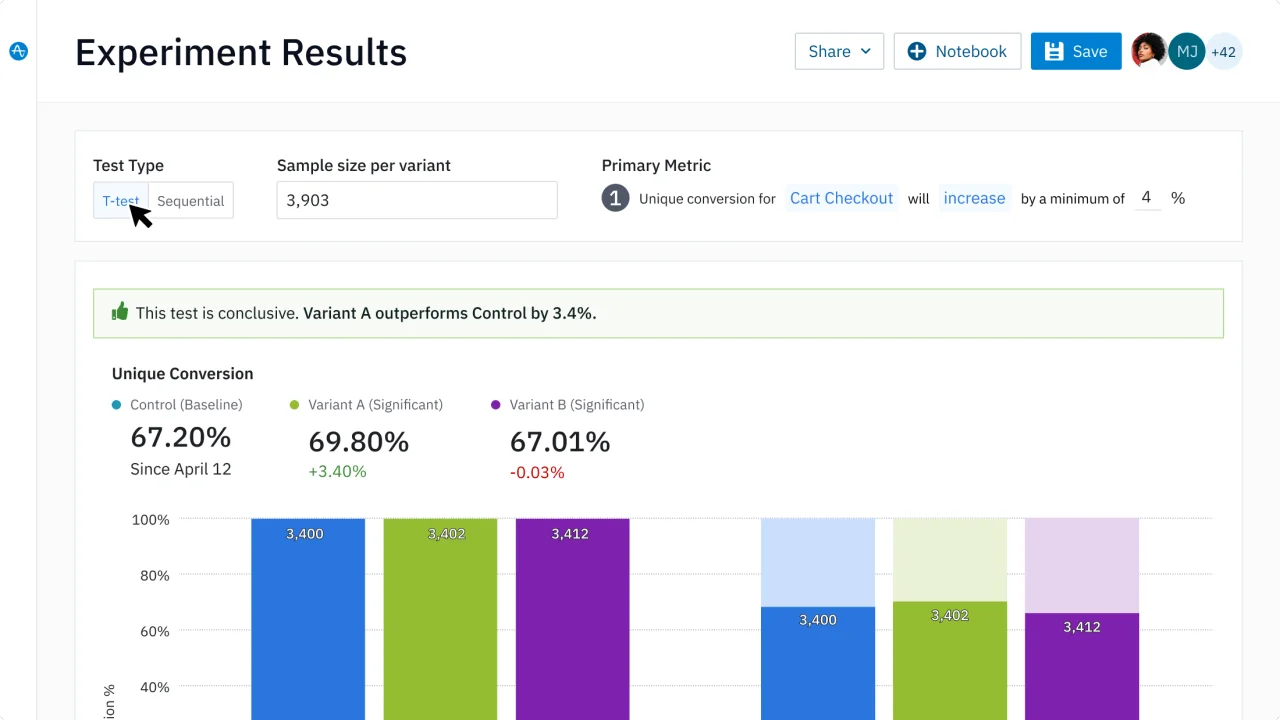
Amplitude Experiment is the experimentation layer built directly into the Amplitude analytics platform. It offers both Web Experiment (a no-code visual editor for marketing site tests) and Feature Experiment (a server-side SDK-based tool for product tests), making it one of the few platforms that genuinely covers both use cases.
The core advantage is native integration with Amplitude analytics. Experiment results appear directly alongside your product metrics, funnels, and retention data without any data export or manual connection. For teams already on Amplitude, this integration removes significant analytical friction.
Amplitude Web Experiment and Feature Experiment serve different use cases and require different implementation approaches andunderstanding the distinction before setup is important.
Best for: teams already using Amplitude for product analytics who want experimentation natively connected to their existing data.
Limitations: Feature Experiment requires engineering for SDK implementation. Advanced statistical features like CUPED are less mature than Statsig. Pricing increases significantly at scale.
Pricing: Web Experiment included in Starter plan with limits. Feature Experiment is a paid add-on on Growth and Enterprise plans.
GrowthBook

GrowthBook is an open-source feature flagging and experimentation platform that reads from your existing data warehouse likeSnowflake, BigQuery, Redshif, rather than storing data itself. This warehouse-native architecture is its defining characteristic: experiment results are calculated directly from your own data, not from a separate data collection layer.
This makes GrowthBook particularly strong for teams with a mature data stack who want full control over their experiment data and do not want to add another data collection dependency. It is also the most flexible tool on this list for custom metric definitions, if your primary metric requires complex SQL logic, GrowthBook handles it cleanly.
The GrowthBook setup guide covers the full implementation process including data warehouse connection and SDK setup.
Best for: data-mature teams with an existing warehouse (Snowflake, BigQuery) who want warehouse-native experiment analysis and full control over their data layer.
Limitations: requires a data warehouse connection to function. More complex initial setup than hosted alternatives. Visual editor requires a paid plan. Self-hosted version requires infrastructure maintenance.
Pricing: open-source self-hosted version is free. Cloud-hosted version has a free tier and paid plans.
Optimizely
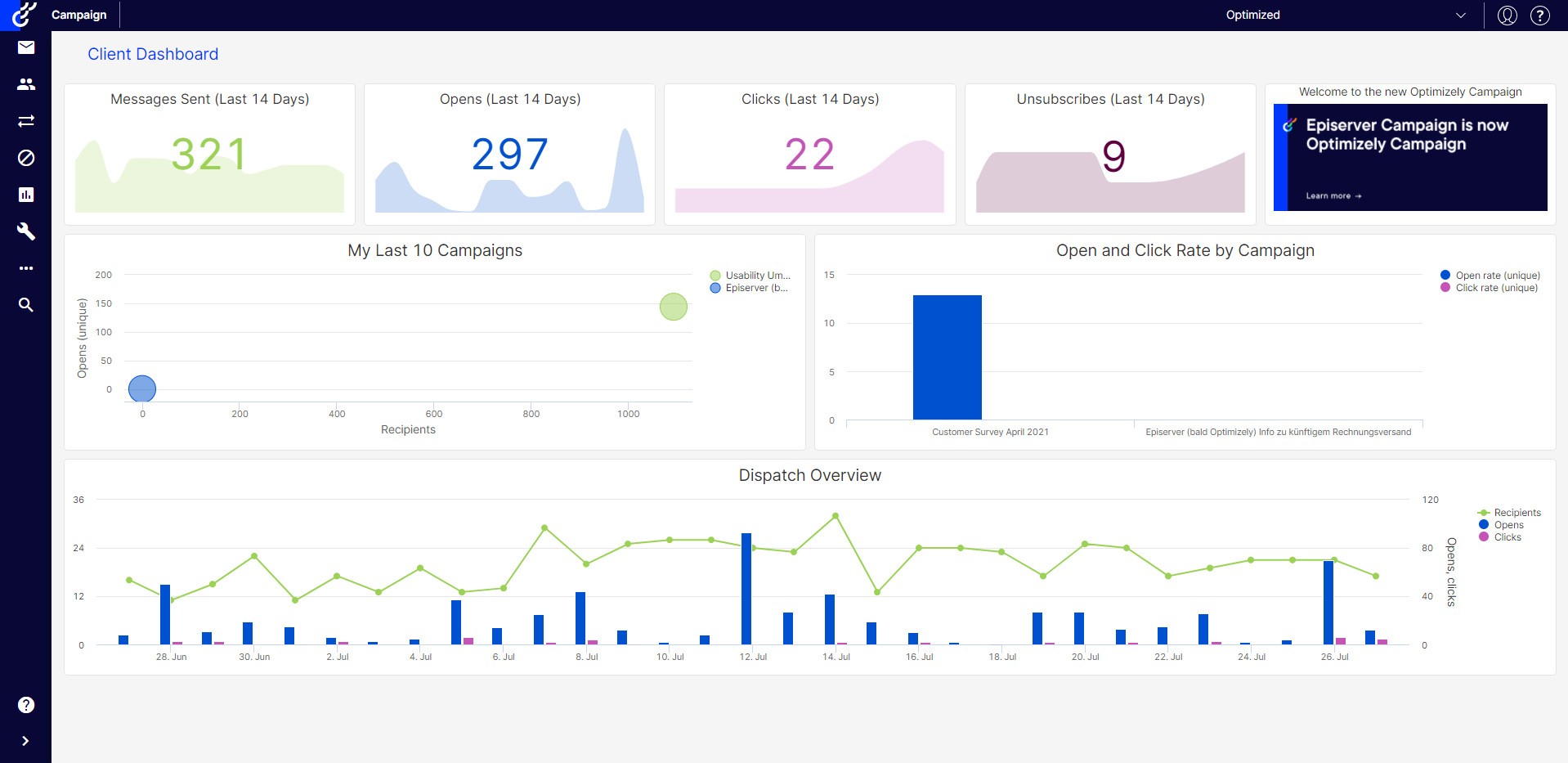
Optimizely is the most established name in A/B testing and one of the original enterprise experimentation platforms. It offers a mature no-code visual editor for web experiments, a full feature flagging and server-side experimentation platform, and a content management layer for larger enterprises.
For marketing teams running high-volume conversion optimization programs on web properties, Optimizely's visual editor and workflow management features are among the most polished available. For product-level experimentation, its Feature Experimentation product competes directly with Statsig and LaunchDarkly.
Best for: enterprise teams running large-scale conversion optimization programs on web properties, or organizations that need a full experimentation platform with mature workflow, governance, and approval features.
Limitations: expensive, pricing is enterprise-oriented and not accessible to most growth-stage teams. The platform's breadth can make it complex to implement and maintain. Overkill for teams not running experiments at significant scale.
Pricing: enterprise pricing, available on request.
VWO (Visual Website Optimizer)
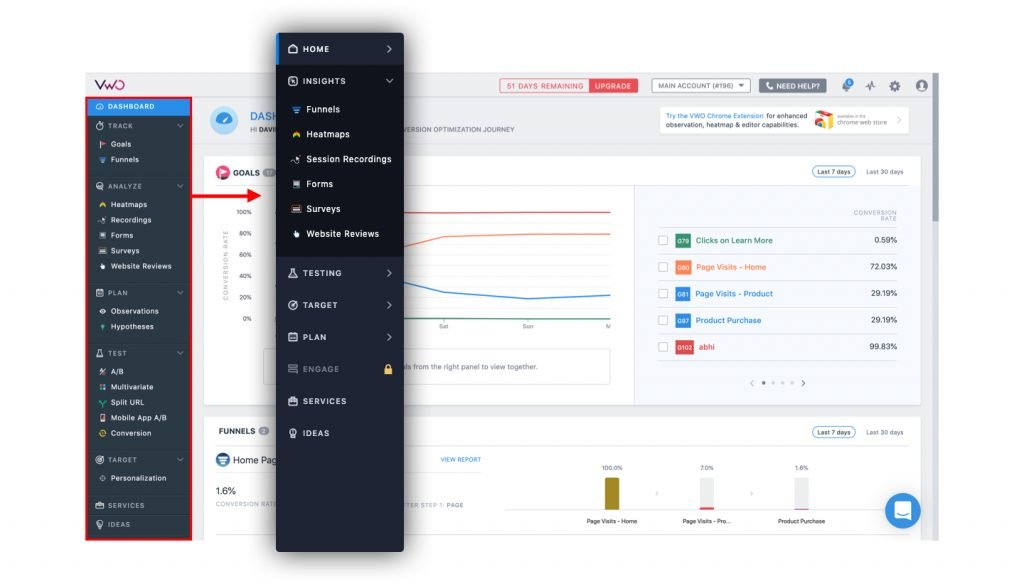
VWO is a conversion optimization platform combining A/B testing, heatmaps, session recordings, and surveys in a single tool. It is positioned as an all-in-one CRO platform for marketing and growth teams rather than a pure experimentation tool.
The visual editor is strong and accessible to non-technical users. The combination of behavioral analytics (heatmaps, session replay) and experimentation in one platform is genuinely useful for teams that want to use qualitative behavioral data to generate hypotheses and then test them in the same tool.
Best for: marketing and CRO teams running website optimization programs who want behavioral analytics and A/B testing in a single platform without engineering dependency.
Limitations: not built for product-level or server-side experimentation. Statistical depth is more limited than dedicated experimentation platforms. Less suitable for engineering-led experimentation programs.
Pricing: tiered plans based on monthly tested users. Free trial available.
LaunchDarkly
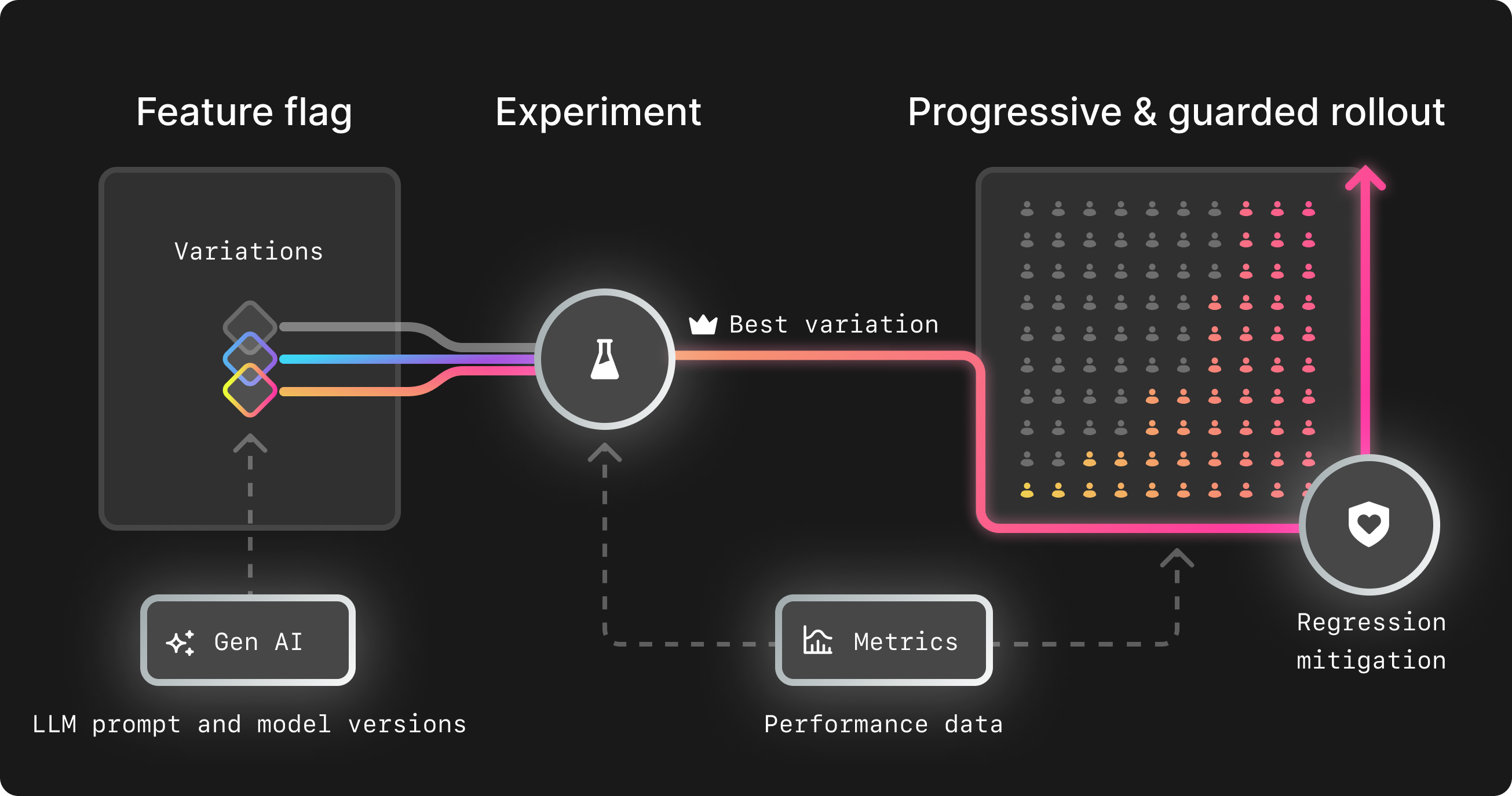
LaunchDarkly is the market leader in enterprise feature flagging. It is built primarily for engineering teams that need robust, scalable feature flag management across complex distributed systems likemultiple services, multiple environments, high deployment frequency.
Its experimentation capabilities have improved significantly but remain secondary to its core feature flagging strength. For teams whose primary need is safe, controlled feature rollouts at scale with enterprise-grade reliability and compliance, LaunchDarkly is the strongest option. For teams whose primary need is statistical experimentation, Statsig or Optimizely are typically better fits.
Best for: enterprise engineering teams that need robust, scalable feature flag management as the primary use case, with experimentation as a secondary capability.
Limitations: expensive at scale. Experimentation features less statistically sophisticated than Statsig. More engineering-oriented than product or marketing teams typically need.
Pricing: starts at around $10 per seat per month. Enterprise pricing available on request.
Kameleoon
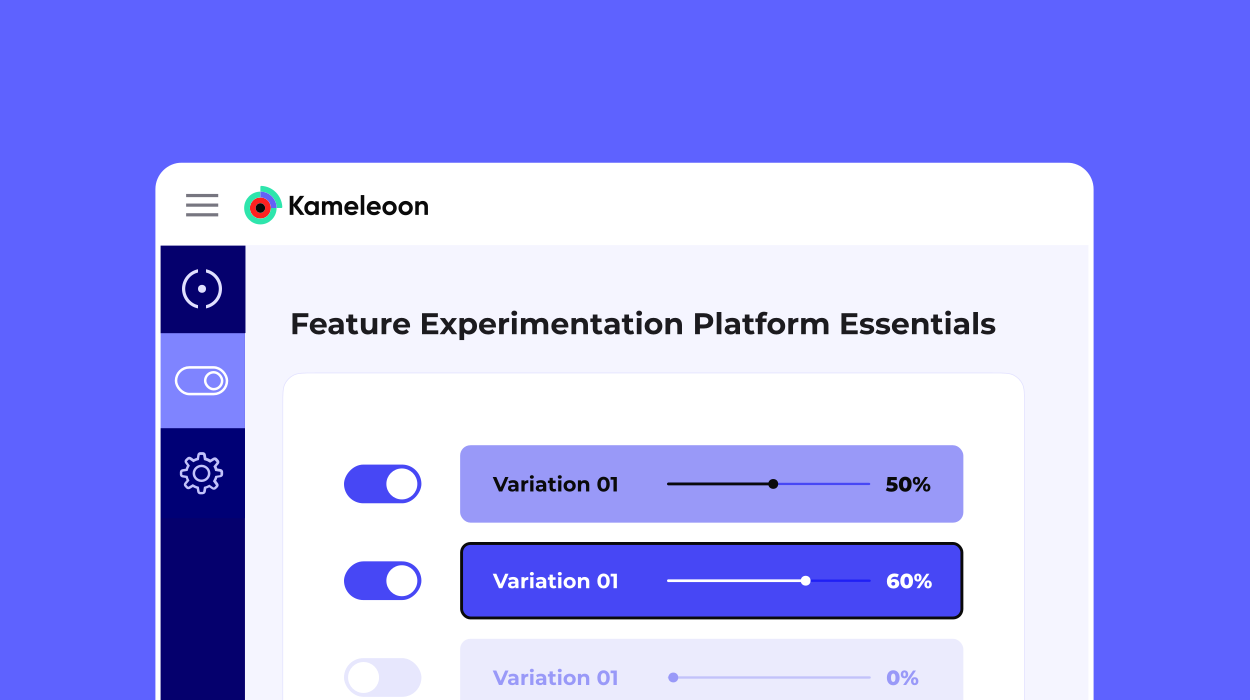
Kameleoon is a European A/B testing and personalization platform with strong GDPR compliance credentials: a meaningful differentiator for teams operating in regulated European markets. It offers both client-side web testing and server-side experimentation, with AI-powered personalization features built in.
Its statistical engine is solid, supporting sequential testing and Bayesian analysis alongside the standard frequentist approach. For European SaaS and e-commerce teams that need GDPR-compliant experimentation with strong personalization capabilities, Kameleoon is worth evaluating.
Best for: European teams that need GDPR-compliant experimentation with personalization capabilities and strong statistical depth.
Limitations: less well known outside Europe. Smaller ecosystem and fewer native integrations than US-based alternatives. Pricing not publicly listed.
Pricing: available on request.
How to Choose the Right A/B Testing Tool
The right tool depends entirely on your specific situation. Here is a simple decision framework.
If you are a product team running server-side experiments with engineering involvement and want the best statistical depth at a growth-stage price point: Statsig.
If you are already on Amplitude and want experimentation natively connected to your analytics: Amplitude Experiment.
If you have a mature data warehouse and want full control over your experiment data: GrowthBook.
If you are a marketing or CRO team running no-code web tests without engineering: VWO or Optimizely Web.
If you are an enterprise engineering team that needs robust feature flag management at scale: LaunchDarkly.
If you are a European team with GDPR requirements and personalization needs: Kameleoon.
The tool choice matters. But it matters less than the quality of your implementation and the rigor of your experimentation process. The 8-step A/B testing framework applies regardless of which tool you use, and it is what separates teams that produce reliable results from teams that produce false winners.
The Hidden Cost of Getting Setup Wrong
Whichever tool you choose, the quality of your implementation determines the quality of your results. Wrong SDK, contaminated environments, inconsistent event naming, misconfigured experiments, these issues are silent. Events fire, experiments run, dashboards populate. And the results are not reliable.
This is true for every tool on this list. The platform does not protect you from implementation mistakes. A structured audit of your setup, before you have run significant experiments is the fastest way to make sure your tool is actually doing what you think it is.
Ready to run your first experiment?
The A/B test design guide covers the complete process fromhypothesis writing, sample size calculation, metric selection, and result documentation, so you can run your first test correctly regardless of which tool you choose.
👉Download the free A/B test design guide
Not sure which tool is right for your stack?
Book a free 30-minute call and we will tell you exactly which experimentation tool fits your use case, and what you need to have in place to run reliable experiments from day one.
Is your experimentation setup ready to produce reliable results?
The Experimentation Readiness Audit assesses your tracking foundation, statistical process, and team workflows across any tool on this list.
👉Get the free Experimentation Readiness Audit
FAQ
What is the best A/B testing tool in 2026?
The best A/B testing tool depends on your use case. Statsig is the strongest choice for product teams running server-side experiments with statistical depth. Amplitude Experiment is best for teams already on Amplitude. GrowthBook is best for warehouse-native experimentation. VWO and Optimizely are best for no-code marketing site tests. LaunchDarkly leads for enterprise feature flag management.
What is the difference between client-side and server-side A/B testing?
Client-side A/B testing modifies the page in the browser after it loads -- it is no-code and accessible to marketers but can cause page flicker and does not work for product-level or backend experiments. Server-side testing assigns users to variants before the page renders, requires SDK implementation by engineering, but produces more reliable results and works across all platforms including mobile and backend.
Do I need engineering to set up an A/B testing tool?
It depends on the tool and use case. No-code tools like VWO and Optimizely Web allow marketers to run website tests without engineering. Server-side tools like Statsig, GrowthBook, LaunchDarkly, and Amplitude Feature Experiment require SDK implementation by engineering. For product-level experimentation, engineering involvement is almost always required.
What is sequential testing in A/B testing tools?
Sequential testing is a statistical method that allows you to monitor experiment results at any point without inflating your false positive rate. It adjusts the significance threshold dynamically as data accumulates, allowing earlier decisions when results are clearly significant. Statsig, GrowthBook, and Kameleoon support sequential testing natively.
What is CUPED and which A/B testing tools support it?
CUPED (Controlled-experiment Using Pre-Experiment Data) is a variance reduction technique that uses historical user data to reduce noise in experiment results, making them more reliable with smaller sample sizes. Statsig and GrowthBook support CUPED natively. Amplitude Experiment has limited CUPED support. Most no-code marketing testing tools do not support it.
How much does an A/B testing tool cost?Costs vary significantly by tool and scale. GrowthBook has a free open-source version. Statsig has a free tier with paid plans scaling by usage. VWO starts at a few hundred dollars per month. Optimizely and LaunchDarkly are enterprise-priced and typically cost thousands per month. Amplitude Experiment pricing depends on your existing Amplitude contract.