.svg)

AI Visibility in Amplitude: How to Track Your Brand in ChatGPT, Claude & Perplexity
📺 Your Guide to Marketing Data in Amplitude (Channels, Ads, Performance)
In the video above, Olivia — a Growth Consultant at Adasight — walks through Amplitude's Marketing Analytics hub, including one of its newest and most interesting additions: AI visibility. If you'd rather see it live, the walkthrough is the fastest way in; this article goes deeper on what AI visibility is and how to actually use it.
The short version: AI visibility in Amplitude shows how often your brand is mentioned in answers from AI assistants like ChatGPT, Claude, and Perplexity, and how your share of mentions compares to competitors. It also surfaces the prompts that tend to bring your product up, so you can see what people ask an LLM when your brand appears. It lives in Amplitude's Marketing Analytics section and gives marketers an early read on their presence in AI-generated answers — something traditional analytics simply don't measure.
What AI visibility in Amplitude is
AI visibility is a view inside Amplitude's Marketing Analytics section that tracks how often your brand shows up in answers from large language models — ChatGPT, Claude, Perplexity, and the like. Instead of measuring clicks or sessions, it measures presence: when someone asks an AI assistant about products like yours, does your brand get named, and how often relative to the competition?
Why this matters now
A growing share of buyers start their research by asking an AI assistant rather than typing into a search bar. If the answer they get names three of your competitors and not you, you've dropped off the shortlist before a single click could happen — and traditional analytics won't flag it, because there's no visit to measure. That's the blind spot AI visibility is built to close. It's the kind of signal you won't find in a conventional setup like Google Analytics 4, which can only tell you about traffic that actually reaches your site.
What Amplitude actually shows you
Two things, mainly.
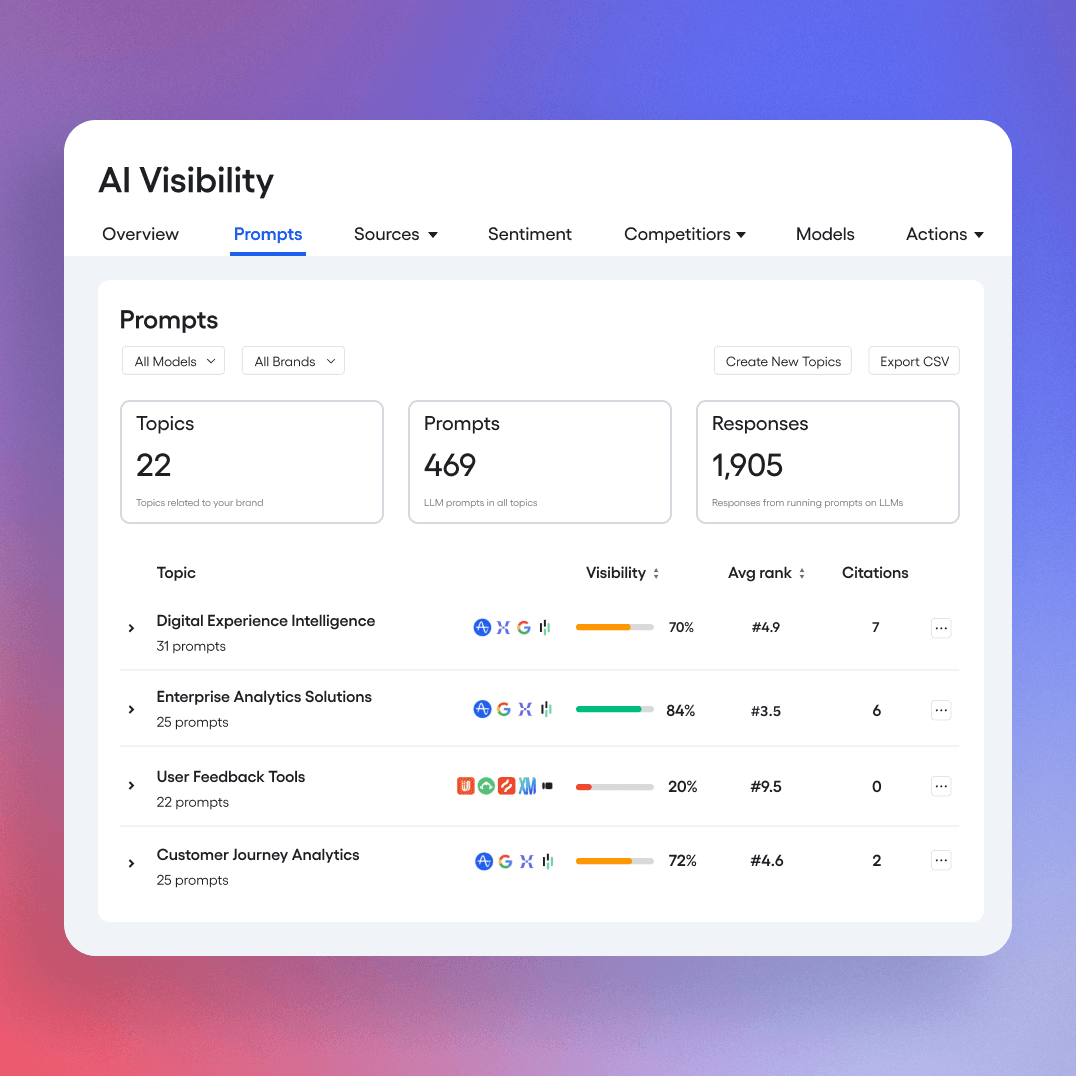
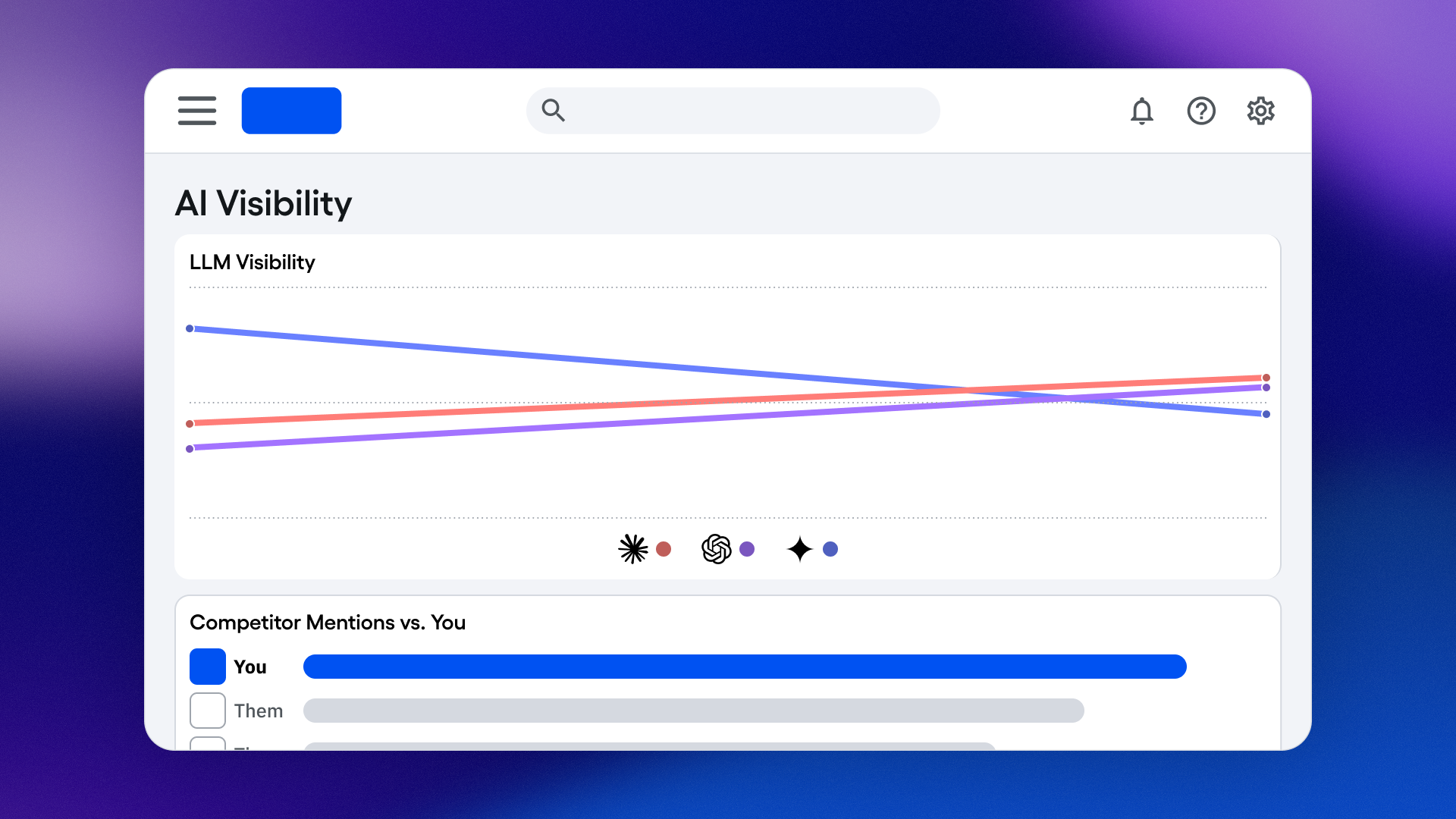
Your share of mentions versus competitors. AI visibility benchmarks how often your brand is named against others in your category — so of all the times an AI assistant recommends a product like yours, you can see how often it's you. In Amplitude's own demo, a sample store is measured against established names in its space (and, being a fictional store, it registers essentially zero while the real players soak up the mentions). The point of the view isn't the exact number; it's the relative standing, tracked over time.
The prompts that surface your product. Amplitude also shows the kinds of prompts that tend to bring your brand up — for example, category phrases like "subscription commerce solution" or "mobile commerce solution." That tells you what someone is asking when your product gets mentioned, which is far more actionable than a single visibility score.
How to use it
- Benchmark honestly against competitors. Treat your share of mentions as a starting line, not a vanity metric. If a rival dominates the answers in your category, that's a gap worth closing.
- Find the prompts you win and lose. The prompt view tells you which topics an AI already associates with you — and which ones it doesn't. The gaps are your content and positioning to-do list.
- Feed it into your GEO strategy. Optimising to be cited by AI (sometimes called generative engine optimisation) is becoming its own discipline. AI visibility gives you a measurement layer for it instead of guessing.
- Track it over time. Like any metric, one snapshot means little. The value is watching your share move as you invest in being the answer.
Where it fits — and what else lives there
AI visibility sits alongside the rest of Amplitude's Marketing Analytics hub — traffic by channel, campaigns, ad performance, and conversions — so your AI presence sits right next to the channels actually driving visits. If you're still setting that foundation up, our guide to tracking marketing channels in Amplitude covers the essentials.
And if you're already using Amplitude's AI for analysis, it's worth being clear that AI visibility is a different flavour of "AI in Amplitude" — this is about your brand's presence in external LLMs, not the in-product AI that answers questions about your data. If that's the part you're after, see Amplitude's AI features and agents.
Turn AI visibility into a repeatable skill
AI visibility is only worth tracking if your team can act on it — reading which prompts to target, and feeding that back into the analytics that show whether your efforts are moving the needle. If you'd rather build that capability in-house than outsource it, our AI & Analytics Workshop is designed to get your team fluent in turning AI and analytics signals like these into real decisions.
See it in action
Reading about it is one thing — seeing the view is faster. Olivia demos AI visibility, along with the rest of Amplitude's Marketing Analytics hub, in under 13 minutes.
▶ Watch "Your Guide to Marketing Data in Amplitude" and follow along in your own workspace.
Want to know how you show up in AI answers?
If you want help setting up Amplitude's marketing analytics — including AI visibility — so you can actually see where your brand stands, Adasight can help.
Frequently asked questions
What is AI visibility in Amplitude?
It's a Marketing Analytics view that tracks how often your brand is mentioned in answers from AI assistants like ChatGPT, Claude, and Perplexity, how that compares to competitors, and which prompts tend to surface your product.
Which AI assistants does it track?
Large language model assistants such as ChatGPT, Claude, and Perplexity — the tools people increasingly use to research and compare products instead of a traditional search engine.
How is AI visibility different from SEO?
SEO is about ranking in search results and earning clicks. AI visibility is about being named in the answer an AI assistant gives — often with no click at all. As buyers shift toward asking AI directly, being cited in those answers becomes its own goal, separate from your search rankings.
Why can't Google Analytics 4 show me this?
GA4 and similar tools measure traffic that lands on your site. If an AI assistant mentions you (or doesn't) and the user never clicks through, there's no visit to record — so conventional analytics are blind to it. AI visibility measures the mention itself.
What do I need to set up to use it?
AI visibility lives in Amplitude's Marketing Analytics section. Once your Amplitude marketing analytics are configured, you can open the AI visibility view to see your brand's share of mentions and the prompts driving them.


.png)