.svg)

Customer Lifetime Value (LTV) Explained: How to Calculate and Increase It
Customer lifetime value is the number that tells you how much you can afford to spend to grow. Get it right and every acquisition, retention, and pricing decision has a rational anchor. Get it wrong — and most teams get it wrong in one of a few specific ways — and you'll either starve growth or spend yourself into a hole. This guide covers what LTV actually is, how to calculate it properly (formulas included), and the levers that move it.
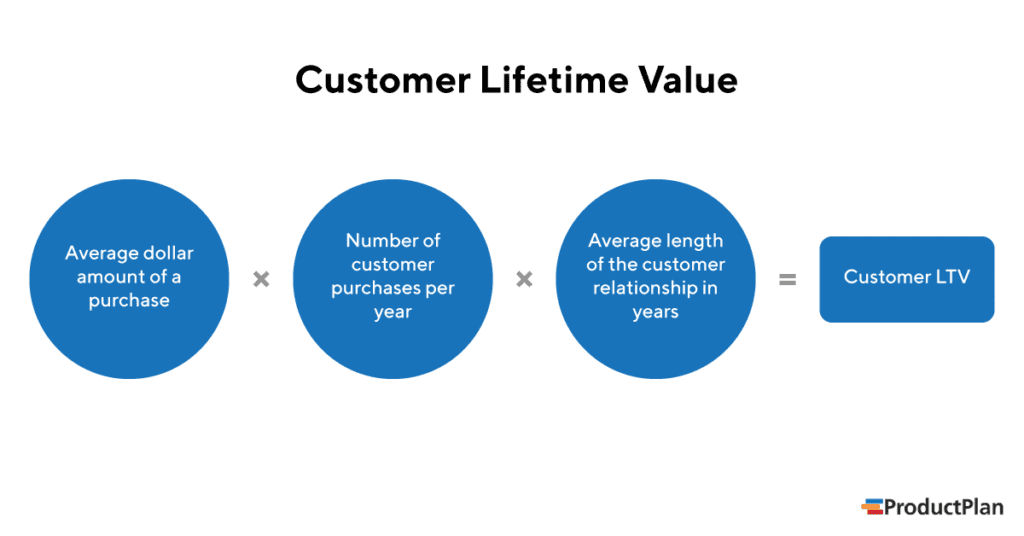
The short version: Customer lifetime value (LTV, sometimes CLV or CLTV) is the total profit you expect from a customer over the entire time they stay with you. At its simplest, LTV = average revenue per customer per period × the gross margin on that revenue × the average number of periods a customer stays. For subscription businesses, average lifespan is often derived from churn as 1 ÷ churn rate. LTV only means something next to acquisition cost: the LTV:CAC ratio (a rule of thumb is roughly 3:1) tells you whether your growth is profitable. And because lifespan is driven by retention, improving retention and reducing churn are usually the biggest levers on LTV.
What LTV actually measures
LTV estimates the total profit a single customer generates across their whole relationship with your business — not one purchase, but the sum of all of them, minus what it costs to serve them. The emphasis on profit matters: a common beginner error is calculating LTV on revenue and forgetting margin, which overstates the number and leads teams to overspend on acquisition.
Conceptually, LTV combines three things: how much a customer is worth per period (adjusted for margin), and how long they stay. Everything in the formulas below is just a way of pinning down those two quantities.
How to calculate LTV
The basic formula
The most common working definition:
LTV = ARPA × Gross Margin % × Average Customer Lifespan
Where ARPA is average revenue per account per period (say, per month), gross margin % converts revenue to profit, and average lifespan is how many periods a customer stays.
Worked example: if customers pay $100/month, your gross margin is 80%, and the average customer stays 24 months:
LTV = $100 × 0.80 × 24 = $1,920.
That $1,920 is the profit you can expect from an average customer — and the ceiling on what you can rationally spend to acquire and retain one.
Deriving lifespan from churn
Most subscription businesses don't measure "average lifespan" directly — they derive it from churn, using a useful mathematical relationship:
Average customer lifespan (in periods) = 1 ÷ churn rate
If your monthly churn rate is 5% (0.05), the average customer stays 1 ÷ 0.05 = 20 months. This is the single most important relationship in LTV, because it shows why churn dominates the number: at 5% monthly churn, lifespan is 20 months; drop churn to 2.5% and lifespan doubles to 40 months — and LTV doubles with it, from nothing but a retention improvement.
Substituting into the formula gives the churn-based version often written as:
LTV = (ARPA × Gross Margin %) ÷ Churn Rate
A note on rigor
These formulas assume a roughly constant churn rate and stable spend — fine as a practical estimate, but real churn usually isn't constant (it's highest early and flattens later). More rigorous approaches use cohort-based LTV (tracking actual revenue from real cohorts over time) or predictive models, and discount future cash flows back to present value. For most teams, the formulas above are the right starting point; just know their assumptions so you don't over-trust a single number.
LTV means nothing without CAC
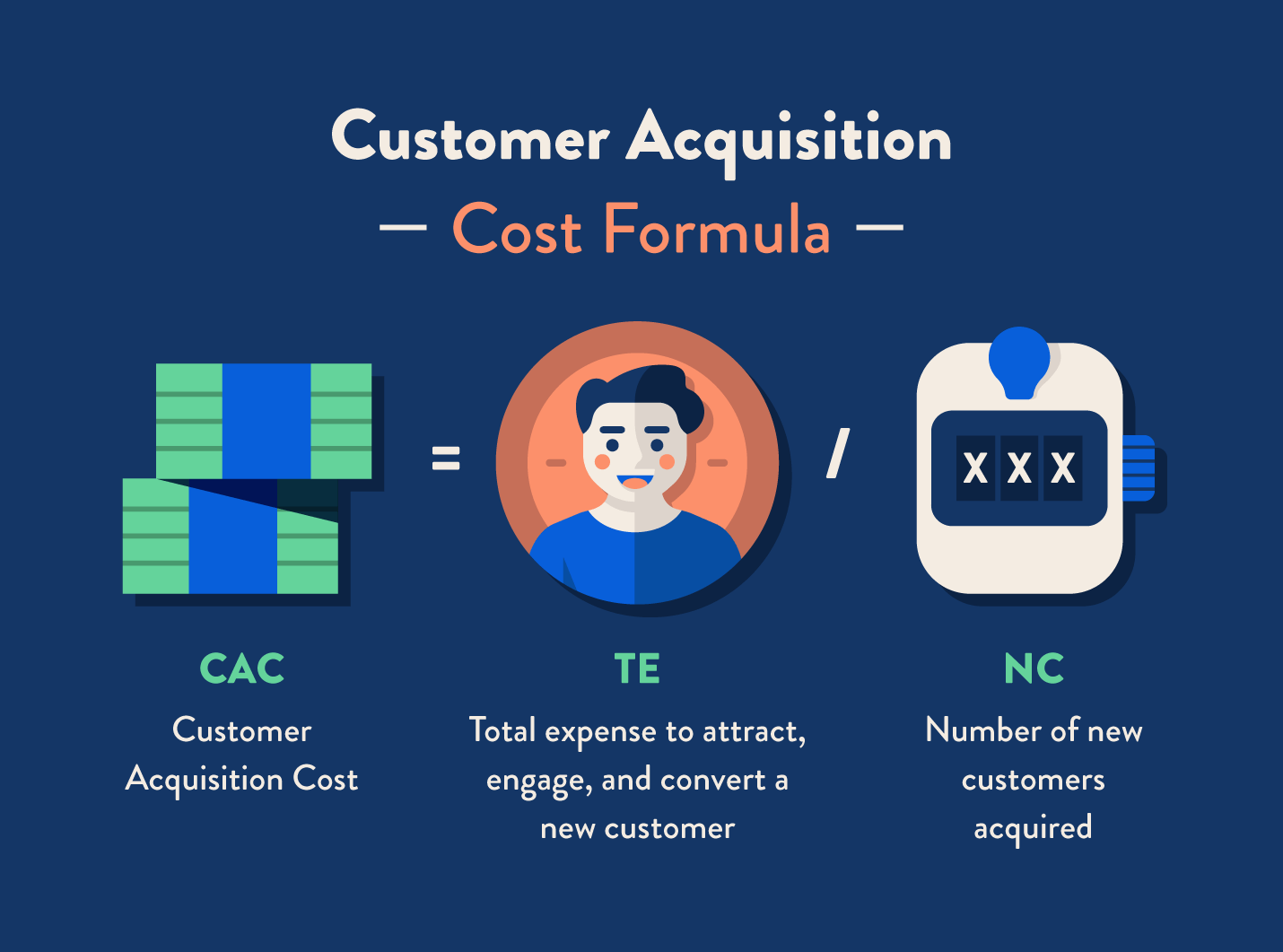
An LTV figure in isolation can't tell you whether your business works — you have to compare it to what it costs to acquire a customer. That's the LTV:CAC ratio, and it's the number growth teams and investors actually watch.
- LTV:CAC ≈ 3:1 is the widely cited healthy benchmark — you earn about three dollars of lifetime profit for every dollar spent acquiring a customer. Treat it as a rule of thumb, not a law; the "right" ratio varies by business model and stage.
- Below ~1:1, you lose money on every customer — you're paying more to acquire them than they'll ever return.
- Much above ~5:1 isn't necessarily "good" — it can signal you're under-investing in growth and could profitably acquire more aggressively.
A related metric, CAC payback period (how many months of margin it takes to recoup acquisition cost), tells you how fast that return arrives — critical for cash flow, since a great LTV:CAC that takes three years to materialize can still sink a company short-term.
Why LTV matters
LTV is a foundational number because so many decisions key off it:
- It sets your acquisition budget. LTV is the ceiling on sustainable CAC. Know it and you can spend confidently up to a rational limit; guess it and you're flying blind.
- It reframes retention as revenue. Because lifespan (via churn) is baked into the formula, LTV makes the financial case for retention undeniable — a point of churn isn't a soft "engagement" concern, it's a direct, quantifiable hit to lifetime profit.
- It's the lagging outcome your leading metrics predict. LTV sits at the bottom of the funnel as a result — activation, engagement, and retention are the leading indicators that drive it. You can't move LTV directly; you move its inputs.
How to increase LTV
Look at the formula — LTV rises when you increase margin-adjusted revenue per customer, or extend how long customers stay. That gives four concrete levers:
- Reduce churn / increase retention. The highest-leverage move, because of the 1 ÷ churn relationship: halving churn roughly doubles lifespan and LTV. This is why retention work pays back so hard.
- Increase ARPA. Expansion revenue — upsells, cross-sells, tiered pricing, usage growth — raises the per-period value of every customer. In many mature SaaS businesses, expansion from existing customers outpaces new-logo revenue.
- Improve gross margin. LTV is profit-based, so reducing the cost to serve (support efficiency, infrastructure, self-serve onboarding) lifts LTV without changing price or retention at all — an often-overlooked lever.
- Strengthen early activation. Because early activation is one of the strongest predictors of long-term retention, getting more users to value quickly raises lifespan upstream — you're widening the top of the retention curve that LTV integrates over.
Measuring LTV in practice
The formulas are a starting estimate; the trustworthy version comes from your actual data. In practice you'd calculate ARPA and gross margin from finance, derive lifespan from your measured churn, and — for real rigor — build cohort-based retention curves to see how long real customers actually stay and how their spend evolves. Segmenting LTV (by plan, acquisition channel, or cohort) is where the insight lives: a blended LTV can hide the fact that one channel produces customers worth triple another's, which should reshape where you spend.
Get the inputs right first
LTV is only as good as the churn, retention, and revenue data feeding it — and a wrong churn number throws off the entire calculation through that 1 ÷ churn multiplier. If your tracking foundation isn't solid, our Data Foundation engagement gets your events and metrics set up so the numbers behind your LTV reflect reality.
Frequently asked questions
What is customer lifetime value (LTV)?
LTV is the total profit you expect a customer to generate over their entire relationship with your business — the sum of all their purchases, adjusted for margin and for how long they stay. It's a foundational metric because it sets the ceiling on what you can afford to spend acquiring and retaining customers.
How do you calculate LTV?
The basic formula is ARPA × gross margin % × average customer lifespan. For subscription businesses, average lifespan is often derived from churn as 1 ÷ churn rate, giving LTV = (ARPA × gross margin %) ÷ churn rate. For more rigor, use cohort-based revenue data and discount future value to the present.
What is a good LTV:CAC ratio?
Around 3:1 is the commonly cited healthy benchmark — roughly three dollars of lifetime profit per dollar of acquisition cost — though it varies by model and stage. Below ~1:1 you lose money per customer; well above ~5:1 may mean you're under-investing in growth and could acquire more aggressively.
Why is churn so important to LTV?
Because average customer lifespan equals 1 ÷ churn rate, churn enters LTV as a multiplier with outsized effect. At 5% monthly churn a customer lasts ~20 months; cut churn to 2.5% and lifespan — and LTV — roughly doubles. Reducing churn is usually the single biggest lever on lifetime value.
How can you increase customer lifetime value?
Four main levers: reduce churn (extends lifespan), increase ARPA through expansion revenue and pricing, improve gross margin by lowering the cost to serve, and strengthen early activation since it predicts long-term retention. Because LTV is profit- and lifespan-based, retention and margin improvements often move it more than raising prices.